I chose to do a Twitter account for Lady Katsa. For her profile picture, I chose a fan illustration of her. They were all very consistent with each other.
For her background photo, I chose a dagger since this is her weapon of choice throughout the novel while she is seen as this 18-year-old girl whose gift is the ability to kill.
Her handle is just @katsa_lady. I chose to do her last name first because she is not the stereotypical lady throughout this novel, gentle and sweet.
Her bio reads, "I will shove your nose into your brain if you touch me." This is because she did this to a man who she did not like due to his mistreatment of women. However, he was smitten with her and when he touched her thigh, she lost it and bashed his nose into his brain, killing him.
I have her account following three other accounts. The first is the US Army. This is because when Katsa was being trained, she practiced with groups of eight to ten soldiers at a time. This account represents that. The second is Ben Stein for the reason that he is depicted as a very bland man that does not laugh or smile. Katsa tends to be very stoic, so she has that in common with him. The third is the Battered Women's Shelter. We see Katsa wanting to stand up for women multiple times throughout the novel. I feel that this follow was extremely important to showcase an important part of Lady Katsa's personality.
I even included one post that included a portion of the lyrics to "Versace" because it says something about Medusa and Lady Katsa somewhat reminds me of Medusa.
“She ran
through corridors, around corners, past servants who flattened themselves
trembling against walls as she flew by.Finally she burst into the darkness o the courtyard.
She crossed the marble floor,
pulling pins from her hair.She sighed
as her curls fell around her shoulders and the tension left her scalp.It was the hairpins, and the dress, and the
shoes that pinched her feet.It was
having to hold her head still and sit straight, it was the infuriating earrings
that brushed against her neck.That was
why she couldn’t stand to spend one moment longer at her uncle’s fine
dinner.She took off her earrings and
hurled them into her uncle’s fountain.She didn’t care who found them.” (Cashore, 70)
The passage above emphasizes a
different side of female identity that challenges “traditional” female
characteristics many have come to know through past culture (As we are in a
ground breaking age for female identity I begin to think, perhaps its hope,
that female identity is beginning to be perceived as being equivalent to male
identity in complexity and opportunity).Katsa, the protagonist of Graceling written by Kristen Cashore, is like
no other female I’ve read or imagined.She is strong willed, determined, and does not subscribe to the many discomforts
put upon a “proper lady.”The passage
above depicts the uncomfortable nature of accessories forced on females by
society.Katsa would much rather wear
sneakers (or the equivalent to within the fantacy world of the middluns) and
jeans.She would not have earrings on or
her hair done, in fact later in the novel she cuts all of her hair off.This presents an opportunity for female
readers to know of a reality in which they are not required to subscribe to
discomforts on the whims of others.Although this passage does well to depict Katsa breaking the female
mold, there are other instances in which further destroy certain expectations
of females; primarily Katsa’s refusal to get married and have children.Katsa would rather be free from marital obligation
and focus on bringing about goodness within the kingdoms than to become a
“house wife.”Some readers may not
believe this entire persona at first, as people may assume that deep down Katsa
is frail and dependent.However, there
are two instances that emphasize Katsa’s determination in being the woman she
is.The first of which is when she
denies Giddon’s, the equivalent to prince charming, marriage proposal.She is shocked and appalled by the idea even
though Giddon is in awe and worships the idea of having her as a wife.The second instance is when she clarifies
with Po the boundaries of their relationship.She insists that she will never marry him if they are to become
otherwise romantically engages.The
morning following their “Romantic engagement” Katsa takes a pill which is
equivalent to the Plan B pill.Katsa
puts forth a very different idea of female identity than is portrayed in common
culture and it is with protagonists like Katsa that give women the power to be
exactly who they truly deem themselves to be by tearing down societal
expectation.
Elizabeth Vlasyuk 28 March 2017 Category B - Prompt D
"You Don't Own Me" by Lesley Gore
The passage I chose is the entirety of Chapter Fifteen, in which Katsa finally stands up to her Uncle and asserts her autonomy. She answers his threats with one of her own, and although she itches to follow through with her threat, a voice of reason (partially influenced by Po) advises her to act rationally, to make her point without bloodshed. Katsa succeeds with a final blow, leaving the court with the words "I'm no longer yours to command" hanging in the air, as her Uncle watches her retreating back, eyes wide and astonished along with his men (170).
I think the passage is best represented in the song's lyrics:
You don't own me
I'm not just one of your many toys... /
And don't tell me what to do
Don't tell me what to say... /
You don't own me
Don't try to change me in any way
You don't own me
Don't tie me down 'cause I'd never stay
The lyric "you don't own me"
resonate with her final words to her Uncle, as well as the lyric "not just
one of your many toys," as if to say others are forced to do his bidding,
while she has the courage not to, because she realizes it's wrong (and she is
able because she is Graced). The lines "don't tell me what to do
[(say)]" represent her establishment of dominance when she addresses her
Uncle with "Don't try to stop me" (170). The last four lines I chose,
represent her defiance to follow her Uncle's orders, which is seen in the
discourse between the two, when she answers "I didn't agree with your
order, Lord King" (166). Her Uncle tried to make her into this ultimate
killing machine, which for a time she followed blindly, then with reluctance,
finally with contempt, until she decided enough was enough. Hence, the lyrics " You
don't own me / Don't try to change me in any way," and the defiance
factor again with the line "Don't tie me down 'cause I'd never stay."
Graceling,
by Kristin Cashore, is a novel in a young adult series that takes place in a
fantasy world.Throughout Graceling, there is a reoccurring motif
of eyes; emphases of eyes can be found in various instances throughout
Cashore’s novel. One of the more obvious examples of this motif can be seen
(pun intended) in the main character herself: Katsa. Katsa has two different
eye colors; one eye is green and the other is blue. However, aside from Katsa’s
own eyes, there are also other important occurrences in the text where this
motif is at play. The motif can be found, and further complicates the reading
of Graceling,when Prince Po loses his eyesight.
Like Katsa, Po also has two different eye
colors; one of his eyes is silver and the other one is gold. Unlike Katsa,
though, Po is Graced with perceiving and mind-reading (however, he is only able
to read minds when people are thinking about him). Po’s abilities to perceive
and mind-read metaphorically tie in with his actual eyesight. Eventually,
though, Po is deeply injured and is left blind. When Katsa learns of this, she
is upset. Po, on the other hand, explains that he was angry until he “found
it.” When Katsa questions what Po has found, he replies, “Clarity. My thoughts
cleared. There was no light in the cave; there was nothing to see. And yet I
sense the cave with my Grace, so vividly. And I realized what I was doing”
(Cashore 449). Here, Cashore uses Po’s blindness as a way for him to understand
himself and the world around him; he is only able to truly understand his Grace
when he is blind. The motif here speaks to readers as Cashore’s commentary for identity,
potential, and (arguably most importantly) power; Cashore is suggesting that
once a person is able to see without using their eyes, looking beyond what is
in eyesight, they are able to finally understand the world around them. Readers
are then able to understand Cashore’s eye motif and learn that it is a
reoccurring symbol for “coming-of-age.”
In many adolescent texts, the expected
coming-of-age almost always occurs when the protagonist is finally able to
“see” the world for “what it really is”. That is, to understand the
world/society/societal structures/power dynamics for the first time with a new
perspective or adult lens. Additionally, the coming-of-age usually ties in with
understanding oneself and being comfortable with one’s own identity. When Po
learns of his Grace, he is able to see the world clearly, despite being blind.
Thus, Graceling uses the motif of
eyes to express adolescent themes such as identity, power, and understanding.
I think that one literary
device that Kristin Cashore uses in Graceling is foreshadowing.
Early on in the book, we learn about Katsa's dislike towards Gracelings
with the ability to read minds. Katsa's attitude towards the child that
can read minds is very judgmental and she does not even give the child a
chance. Katsa says "Then she'll know I'll want to knock her
senseless if she so much as looks at me" in regards to the mind reading
Graceling (Cashore 28). I think that Katsa's strong dislike towards this
child who has the Grace to read minds foreshadows the dislike she will have for
Po once she learns the truth about his Grace, which is the ability to sense
Katsa’s thoughts and intentions towards him.
Katsa is appalled by the idea of anyone having the ability to read minds
and does not understand “why anyone would want to keep them close” (Cashore
28).
Also, I think Cashore
foreshadows Po’s fear of people learning the truth about his Grace. In this scene, it is disclosed, “mind readers
were valuable tools for a king to wield” (Cashore 28). This foreshadows Po’s predicament with
telling his father and brother’s the truth about his power. Po keeps his Grace a secret because he does
not want to be used by his father or brother’s to gain political ground. This truth about mind readers being used by royalty
to gain ground over their opponents and enemies is emphasized in this book
early on, and this is one thing that Po, and later on Katsa, want to avoid
throughout the book
This avoidance towards the
world discovering the truth about Po’s Grace can also be argued foreshadows how
Katsa snaps out of King Leck’s trance.
Katsa kills Leck in order to protect Po’s secret. If the necessity of
keeping this secret was not emphasized early on in the book with the child mind
reader, then it would be harder to understand Katsa’s rash decision.
Overall, I think Cashore
foreshadows Katsa discovering the truth about Po and Po’s fear of the world
finding out the truth about his Grace early on in the novel. There are many similarities between Katsa
dislike towards the child mind reader and Po’s Grace of perception in Chapter
Two of Graceling. This use of foreshadowing
gives the reader early insight about Po along with what to expect with Katsa
reaction to determining the truth about him and his Grace.
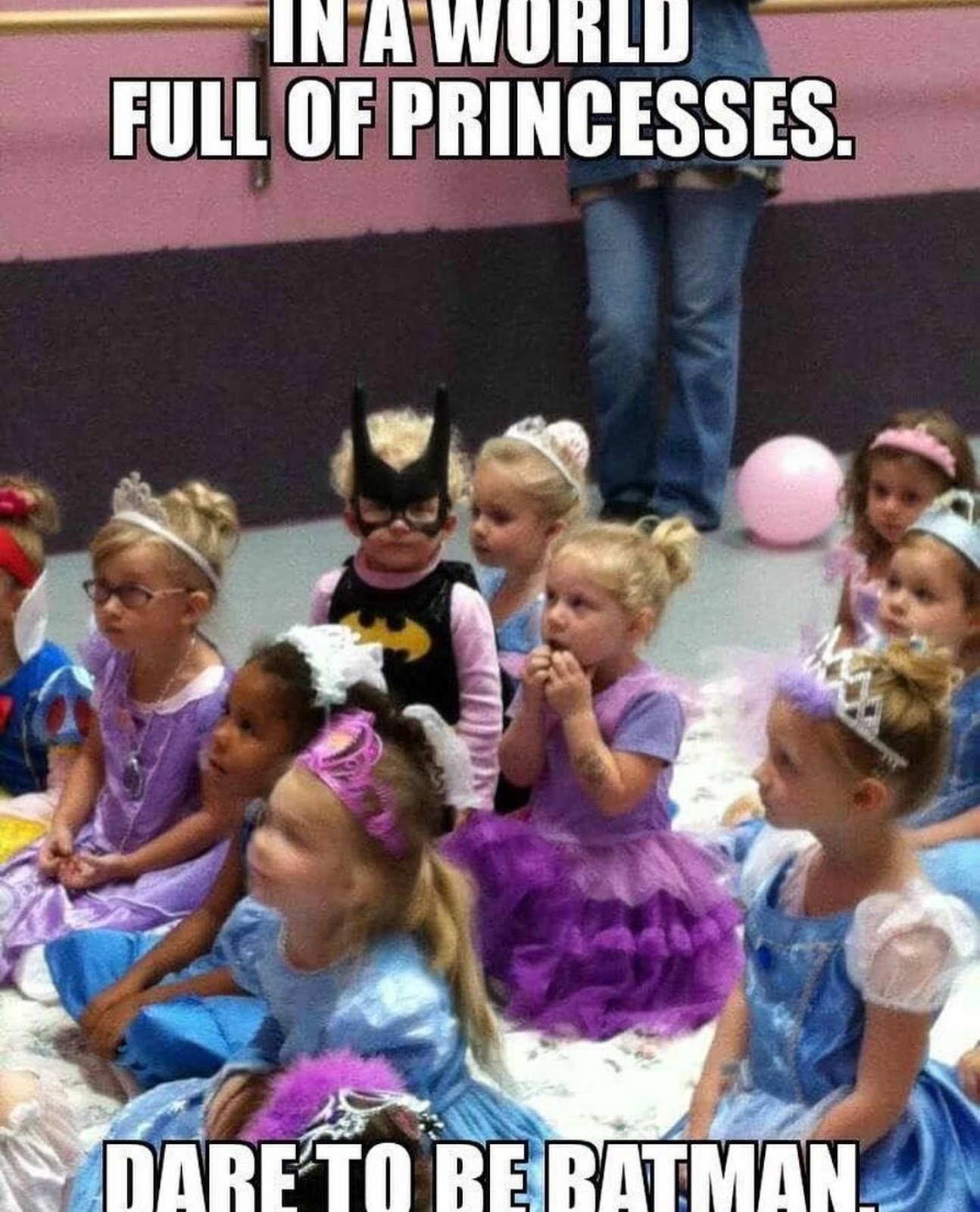
I chose this assortment of memes to represent various facets of Katsa's personality and life experiences. The first reflects her relationships with her uncle. He has exploited her and her talent for killing for almost all of her young life, so this sarcastic meme represents her understandable resentment towards him. The second meme represents her talent for killing, but her distaste for using her talents excessively and without good reason. Her uncles sometimes forces her to kill to a level that makes her feel lesser as a person. The third meme stands for how no one is suspicious of Katsa's true identity and talents in the kingdom because of her standing in society as a princess. This illusion also ties into the last meme, as Katsa is a princess by day but a hero (of sorts) by night. Although she kills people, she is acting as a vigilante for justice.
“My uncle thinks me a savage. He thinks me a killer. Well, isn’t
he right? Didn’t I become savage when he entered the room? And what is it we’re
practicing every day?” She tore apart a piece of bread and threw it onto her
plate. She glared at her meal.
“I don’t believe you’re savage,” he said.
She sighed, sharply. “You haven’t seen me with Randa’s
enemies.”
He raised his cup to his lips and drank, then lowered it,
watching her. “What will he ask you to do this time?”
She pushed the fire down that rose up from her stomach. She
wondered what would happen if she slammed her plate on the ground, how many
pieces it would break into.
“It’ll be some lord who owes him money,” she said, “or who
refused to agree to some bargain, or who looked at him wrong. I’ll be told to
hurt the man, enough so that he never dishonors my uncle again.”
“And you’ll do what he tells you to do?”
“Who are the fools who continues to resist Randa’s will?
Haven’t they heard the stories? Don’t they know he’ll send me?”
“Isn’t it in your power to refuse?” Po asked. “How can
anyone force you to do anything?”
The fire burst into her throat and choked her. “He is the
king. And you’re a fool, too, if you think I have a choice in the matter.”
“But you do have a choice. He’s not the one who makes you
savage. You make yourself savage when you bend yourself to his will.”
She sprang to her feet and swung at his jaw with the side of
her hand. She lessened the force of the blow only at the last instant, when she
realized he hadn’t raised his arm to block her. Her hand hit his face with a
sickening crack.
Chapter 12
Pages 120-121
Animal I Have Become
Three Days Grace
I can't escape this hell So many times I've tried But I'm still caged inside Somebody get me through this nightmare I can't control myself
So what if you can see the darkest side of me? No one will ever change this animal I have become Help me believe it's not the real me Somebody help me tame this animal (This animal, this animal)
I can't escape myself (I can't escape myself) So many times I've lied (So many times I've lied) But there's still rage inside Somebody get me through this nightmare I can't control myself
So what if you can see the darkest side of me? No one will ever change this animal I have become Help me believe it's not the real me Somebody help me tame this animal I have become Help me believe it's not the real me Somebody help me tame this animal
Somebody help me through this nightmare I can't control myself Somebody wake me from this nightmare I can't escape this hell
(This animal, this animal, this animal, this animal, this animal, this animal, this animal)
So what if you can see the darkest side of me? No one will ever change this animal I have become Help me believe it's not the real me Somebody help me tame this animal I have become Help me believe it's not the real me Somebody help me tame this animal (This animal I have become)
This song is fitting for the passage because Katsa feels like an animal, or "savage," as she states.During her childhood, she struggles with her Grace: the ability to kill anyone. In fact, she ends up killing her cousin due to her embarrassment of his compliments regarding her eyes. Although as a teeanger she seemingly has a handle on her Grace, it still resides inside of her and she at times cannot control it. Her uncle uses her to his will to kill anyone who wrongly crosses his path, which hinders Katsa and her ability to truly grasp her skills to give the punishment that she sees fit. She wishes not to kill anyone who does not deserve it, but has a difficult time trying to fight her desires and what King Randa expects of her. Due to this, she becomes a savage because she feels she is losing a battle and does not know what to do. It is not until she meets Po that she realizes that she has the power to not be the savage she has become. I can picture this song playing softly in the background and building as she punches Po, because the beast has come out while Po is only trying to help her. She feels she is stuck within her uncle's orders, and she has not tried to defy him, as she fears his wrath. But Po helps her to revolt against King Randa when she does not kill a man she feels does not deserve it, and threatens to kill anyone who wrongly crosses her path. Soon Katsa takes responsibility of her Grace, and who she is, into her own hands, while falling in love with the man who helps her and finds out more about her Grace.